Is Building a Personal Brand Prideful? A Christian Perspective
Is building a personal brand prideful? Evan Wilson offers a Christian framework for visibility, humility, and stewarding influence without making it an idol.
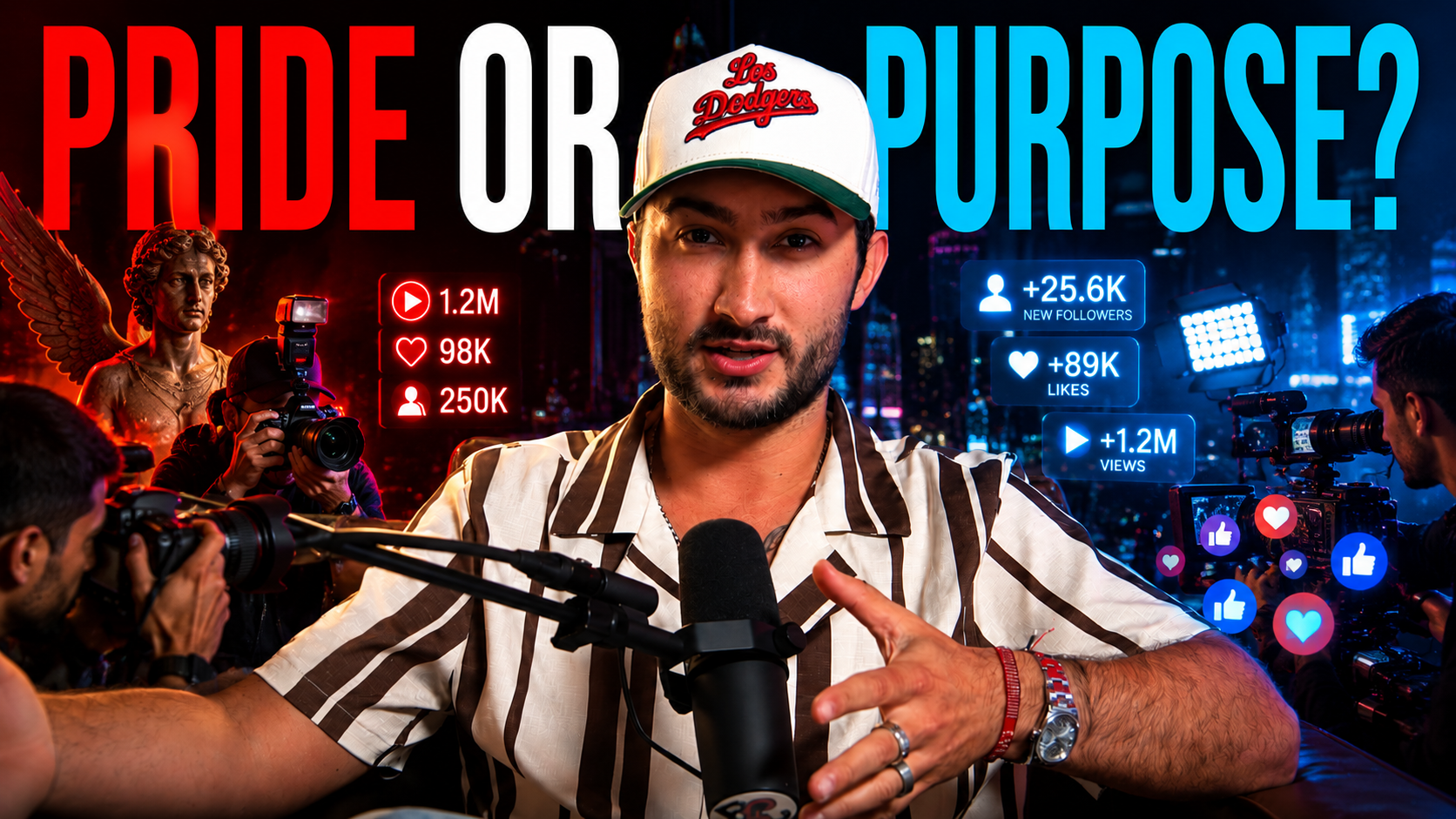
If you are a Christian who feels called to write, teach, create, lead, build a business, or speak publicly, you have probably felt the tension: Is building a personal brand prideful?
My short answer is no. Building a personal brand is not automatically sinful, and staying unknown is not automatically humble. The real question is whether you are trying to make yourself the point, or whether you are stewarding a message, gift, and opportunity that God has entrusted to you.
I have spent the last decade helping pastors and ministries communicate online. That work has contributed to more than 500 million views and audiences totaling more than 10 million followers. I have seen influence help people hear truth they might never have encountered otherwise. I have also seen how quickly influence can become about ego. Both are possible, which is why Christians need more than a shallow answer.
This video unpacks the tension in more depth. But whether you watch it now or later, this article gives you a clear framework for thinking about visibility, humility, and obedience.
A Personal Brand Is a Tool, Not an Identity
The language of personal branding can make Christians uncomfortable, and that instinct is understandable. A brand can become a performance. It can tempt you to exaggerate your life, edit out your weakness, make your audience your judge, or treat attention as proof that you matter.
That is real danger. But danger is not the same thing as prohibition.
A personal brand, at its healthiest, is simply the public clarity around what you do, what you care about, and how people can learn from or work with you. It is not your soul. It is not your value. It is not permission to manufacture a more impressive version of yourself.
For a Christian creator, pastor, leader, or business owner, a public platform can be a way to make a real message easier to find. It can help people who cannot sit in your office, attend your church, read your book in person, or hear you teach on a Sunday. The question is not whether people know your name. The question is what you do with the attention when it comes.
Visibility Is Not Holiness, and Obscurity Is Not Holiness
Somewhere along the way, many Christians started treating invisibility like a fruit of the Spirit. It is not.
Jesus spoke about a lamp that is meant to give light and a city set on a hill. Those images do not command every believer to pursue fame. They do remind us that a gift meant to serve people should not be buried out of fear.
The same distinction appears in the parable of the talents in Matthew 25. The servant who buried what he had been entrusted with may have thought he was being careful. But he did not multiply it, invest it, or take the risk of stewardship. He protected it from loss, but he also kept it from fruitfulness.
That is worth sitting with if you have been delaying something you know you are meant to do. Maybe you keep saying you are waiting for the perfect moment to start the channel, write the book, launch the project, teach the idea, or share the story. But sometimes what we call humility is actually fear of being seen.
There are hidden seasons, and they matter. David spent time with sheep before he stood in front of Goliath. God can develop a person privately before using them publicly. But David did not stay in the field when the assignment required courage in public.
Visibility is not holiness. Obscurity is not holiness. Obedience is.
False Humility Can Look Like Fear
False humility says, “I would do what I feel called to do, but I do not want anyone to think I am full of myself.” That can sound spiritual. It can even win approval in environments where people are nervous about ambition.
But you will never find a version of obedience that nobody can criticize.
If you need everyone to understand your motives before you act, you will always have a reason to wait. Someone will think you are self-promoting. Someone will question why you are posting. Someone will prefer that you stay at the level where they are comfortable with you.
That does not mean every critic is jealous or every concern is wrong. Sometimes criticism reveals a blind spot. Sometimes you need to repent, listen, or submit to people who know you well. A Christian who cannot receive correction is not ready for more influence.
But criticism is not automatically a prophetic word. It can also be insecurity dressed up in theological language. The right response is not to become defensive or cynical. It is to stay accountable, tell the truth, and refuse to let other people’s fear become your steering wheel.
Do Not Let the Crab Bucket Decide Your Calling
There is an old image of a crab bucket: you do not need a lid because when one crab tries to climb out, the others pull it back down.
Christian environments can work like that too. Everybody is comfortable while everybody stays roughly at the same level. But when someone starts building, growing, receiving opportunities, or reaching more people, the tone changes. Suddenly the person is accused of building their own kingdom or trying to become somebody.
Again, self-promotion can be ugly. But it is possible to call someone arrogant simply because their courage exposes your own hesitation. Your consistency can make someone else aware of what they have avoided. Your multiplication can remind them of something they buried.
You do not need permission from people who buried their gift to steward yours.
That is not a reason to despise people or dismiss feedback. It is a reason to know the difference between wise correction and a crowd that needs you to stay small in order to stay comfortable.
David and Saul Show the Difference Between Visibility and Insecurity
David is one of the clearest biblical pictures of this tension. He was anointed, then returned to a hidden assignment. Later, when Goliath appeared, his obedience became highly visible. People knew his name. They sang about him. His influence grew.
David’s visibility was not the problem. Saul’s insecurity was the problem.
Saul could celebrate David while David’s success felt useful to him. But when David’s recognition threatened Saul’s sense of status, Saul became unable to celebrate what God was doing through someone else. That is the warning for all of us. Another person’s influence can reveal whether we are secure enough to honor what God is doing beyond our own lane.
God may call one person into a hidden season and another into a visible one. Neither assignment is automatically more spiritual. If God has you hidden, be faithful there without becoming resentful. If God asks you to step forward, do not apologize for being available.
Admiration Is Not the Same as Idolatry
Christians sometimes treat any admiration of a leader as idolatry. That is too simplistic.
No pastor, creator, teacher, or public figure should become unquestionable, uncorrectable, or spiritually infallible. Idolatry is real, and platforms can create unhealthy dependence.
But healthy admiration is not the same thing as idolatry. Healthy admiration can say, “I see faithfulness, courage, skill, or character in this person, and it makes me want to become more faithful too.” Paul could tell believers to imitate him as he imitated Christ. That was not a claim to perfection. It was an honest acknowledgment that God had formed something worth following.
The goal is not to be admired for your own sake. The goal is to build a life and body of work that points people toward what is true, beautiful, and faithful.
Three Tests for Whether You Are Stewarding Influence or Serving an Idol
The question is not simply, “Do I have a platform?” The question is, “What is the platform doing in me?” These three tests are useful whenever you are building visibility online.
1. The identity test: If the audience disappeared, would you still know who you are?
You can celebrate growth. You can care about whether your message reaches people. You can study what makes content more useful and more discoverable. But if views, followers, comments, or applause determine your value, you have given the audience authority it was never meant to have.
Your identity has to be settled before the numbers rise and before they fall. Otherwise every post becomes a referendum on your worth.
2. The integrity test: Is your public identity telling the truth about your private life?
Every public platform is selective. No one posts every struggle, conversation, or moment. Selective is not the same as deceptive.
The warning sign is when your brand requires a fictional version of you to survive. Can you admit when you are wrong? Can you receive correction? Can you celebrate someone else succeeding in the same space? Can you be honest about the parts of your life that do not fit the image you would prefer to project?
If the brand has to protect you from the truth, it is no longer serving you. You are serving it.
3. The obedience test: Would you step forward or step back if God asked you to?
This is the deepest test. If you will only obey when obedience grows the platform, you are following growth rather than God. But if you refuse to step forward because you are afraid people will call you prideful, you may be following their approval instead.
Stewardship means holding visibility with open hands. Build when God calls you to build. Rest when He calls you to rest. Speak when He gives you something to say. Step back when the assignment changes.
How to Build a Christian Personal Brand With Clean Hands
You do not need to become a self-obsessed content machine. You do need a few practical commitments.
- —Start with service. Ask who becomes better served if you make this message easier to find.
- —Tell the truth. Do not exaggerate your results, invent an identity, or imply an experience you do not have.
- —Stay accountable. Keep people close enough to correct you when the platform begins shaping your motives.
- —Celebrate other people. Learn to honor someone else’s success even when it touches your lane.
- —Measure wisely. Metrics can show whether a message is reaching people. They cannot tell you whether you are loved, called, or valuable.
- —Keep building skill. Faithfulness does not require poor communication. Learn to write better, speak clearly, make useful content, and serve people with excellence.
If you need a practical framework for the mechanics of a platform, read my guide on how to build a platform as a Christian creator. And because the way you create matters as much as the size of the audience, my article on using AI without becoming invisible is a helpful companion.
Build With Clean Hands, Then Stop Apologizing
The world does not need more gifted Christians hiding behind false humility. It needs people who can become visible without becoming proud and who can be hidden without becoming resentful.
You do not have to pretend you are more important than you are. You do not have to turn yourself into an idol. You can build with clean hands, tell the truth, remain accountable, celebrate other people, and keep your identity rooted in Christ.
Then stop apologizing for using the gift God gave you.
If you are a pastor, ministry leader, or faith-driven creator who needs help translating a real calling into a clearer media strategy, learn about working with Evan one-on-one. If you are earlier in the process and want practical support alongside other Christian creators, explore the Breakers Creator Academy.
Frequently Asked Questions
Is building a personal brand prideful for a Christian?
No. Building a personal brand is not automatically prideful. It becomes dangerous when attention, approval, or status becomes the source of your identity, or when your public image requires you to be deceptive. A platform can be a practical way to steward a message and serve people when it stays under the authority of obedience to God.
What is the difference between personal branding and self-promotion?
Personal branding can clarify who you serve, what you do, and how people can find a useful message. Self-promotion becomes unhealthy when the goal is to secure validation, exaggerate your importance, or make yourself the point. The difference is revealed by your motives, your honesty, and whether you can remain accountable.
Should pastors and Christian leaders build an online platform?
Pastors and Christian leaders should not pursue visibility for its own sake, but an online platform can help them serve people beyond a room, a city, or a Sunday gathering. The right question is whether the platform helps them steward their assignment faithfully while remaining accountable, truthful, and rooted in Christ.
What should I do when Christians criticize me for becoming more visible?
Listen humbly enough to receive real correction, but do not assume every criticism is a command from God. Test feedback with people who know your character and are willing to tell you the truth. You cannot build a faithful life around the requirement that nobody misunderstand your motives.
How can I grow online without making my platform an idol?
Keep your identity separate from your metrics, tell the truth about your life and work, stay close to accountable relationships, celebrate people who succeed beside you, and remain willing to obey even when obedience asks you to step back. Growth is a tool for stewardship, not a verdict on your value.
The Point Is Not to Be Known. It Is to Be Faithful.
You may be in a season where God is developing you privately. Be faithful there. Or you may be in a season where the message in you needs to be shared more widely. Be faithful there too.
Do not let pride drive you toward a platform. Do not let fear keep you from one. Let obedience decide.
If you want to keep thinking about responsible influence, watch my video and read Is Using AI a Sin? A Christian Guide to AI, Faith, and Discernment. The tools we use and the platforms we build both matter because they shape how we steward influence.
Online Campus Pastor at V1 Church. Husband, father, media strategist, filmmaker, and creator economy builder. Read more about Evan →
Ready to build your platform?
Join 1,000+ creators who have gone through the Breakers Creator Academy — built for Christians who want to build a platform and monetize their message.
Join the Academy — $37/mo