Is Using AI a Sin? A Christian Guide to AI, Faith, and Discernment
Is using AI a sin? Pastor Evan Wilson gives a direct Christian answer — AI is not inherently sinful, but it becomes spiritually dangerous when it replaces something God has asked you to carry. A practical guide to discernment, sermon prep, Bible study, and authentic content creation.
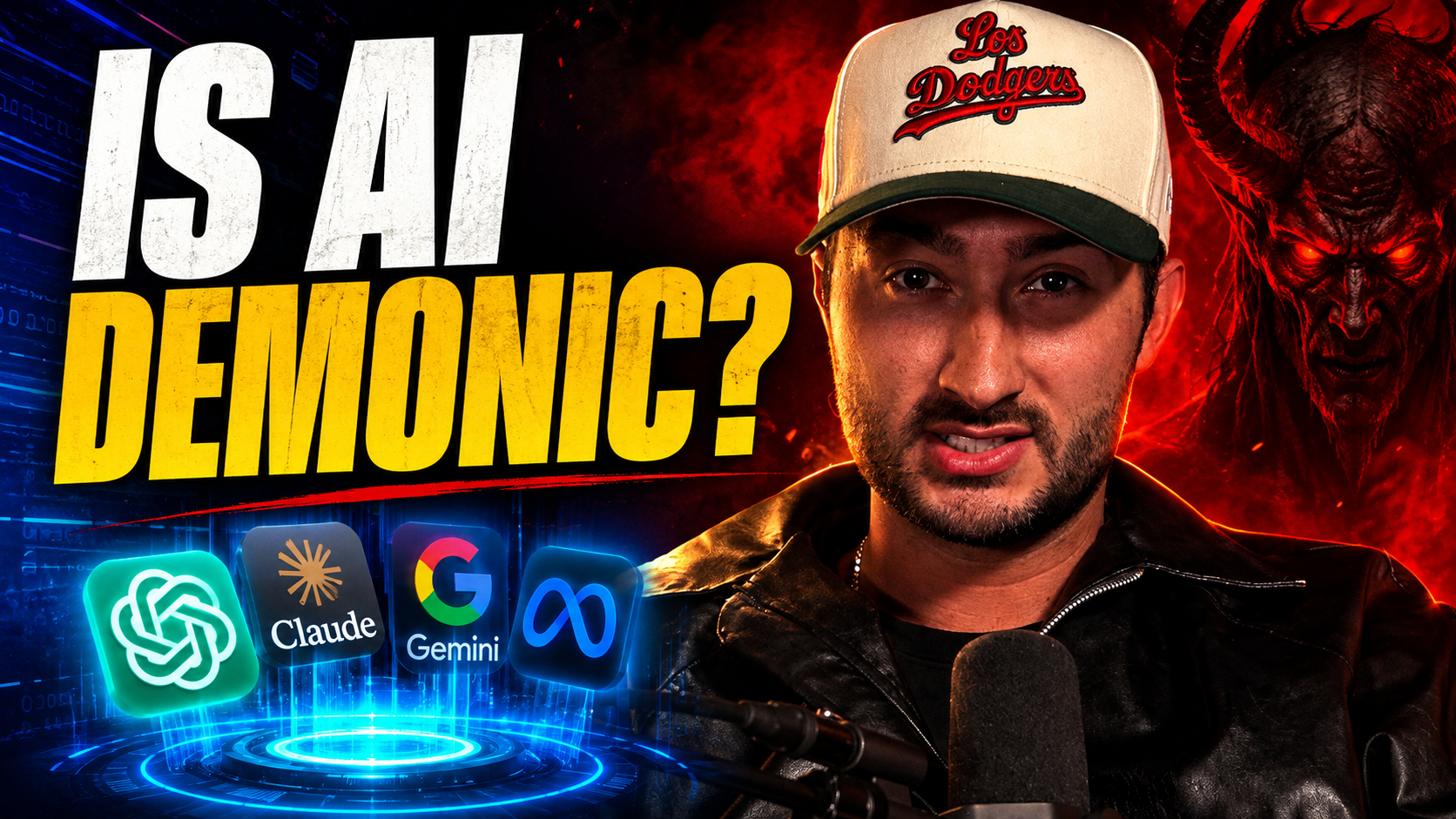
Is using AI a sin? Is ChatGPT spiritually dangerous? And if a Christian uses artificial intelligence to study the Bible, prepare a sermon, create content or run a business, are they replacing the Holy Spirit?
Here is my short answer: using AI is not inherently sinful, but it can become spiritually dangerous when it replaces something God has asked you to carry.
That distinction matters. Christians are already using AI to research Scripture, organize ideas, create content, manage businesses and make decisions. Some feel guilty whenever they open an AI tool. Others embrace it without asking what it may be weakening in them.
Neither fear nor unquestioning acceptance is a sufficient Christian response. We need discernment: what can AI responsibly assist, what should it never replace, and when does convenience become compromise?
Watch: Is Using AI a Sin? A Christian Pastor's Honest Answer
I have spent more than 13 years working in ministry and media. I am a pastor, creator and business owner, and I use AI in real life—not from the sidelines. It has helped me reclaim time, strengthen systems and create stability for my family and team. But there are parts of my faith, work and responsibility that I will not hand over to a machine.
Is AI sinful or demonic?
No. Artificial intelligence is a human-built technological system. It is not a spiritual being, and using a tool such as ChatGPT is not automatically a spiritual act.
That does not mean technology is spiritually neutral in every application. Human beings can use AI to spread deception, imitate real people, reinforce delusion, produce destructive advice and make falsehood sound convincing. Technology can amplify both creativity and brokenness.
But calling AI itself demonic can distract us from a responsibility Christians cannot escape: we are accountable for what we build, what we consume and what we choose to trust.
AI is not God, but AI is not the devil either. It is a tool shaped by human data, decisions, incentives, creativity and sin. The better question is not merely, "Is this technology evil?" It is, "What fruit is this use of technology producing?"
First Thessalonians 5:21 gives us a better posture: "Test everything; hold fast what is good." Scripture does not tell us to accept everything or reject everything. It tells us to test.
Christians should neither worship AI nor fear it. We should examine it with wisdom.
Is using ChatGPT cheating?
Using AI is not automatically cheating. Human beings have always used tools to extend their abilities. Calculators help us work with numbers. Cameras capture what we see. Spell-check corrects writing. Editors help us communicate more clearly.
Reducing effort is not inherently immoral. The ethical problem begins when AI helps us deceive someone, violate an expectation, misrepresent our work or avoid a responsibility we were supposed to carry.
If a student receives an assignment designed to develop critical thinking and lets AI do all the thinking, the student did not merely save time. They skipped the formation the assignment was intended to produce.
If a client pays for a professional's expertise and receives unverified, generic AI output presented as original expert work, that is not wise leverage. It is a failure of responsibility.
On the other hand, AI can responsibly help organize notes, challenge an argument, identify gaps, summarize source material or make a repetitive process faster.
The clearest boundary is this: using a tool is not cheating; deceiving someone about the work is.
Ask whether AI assisted you honestly or allowed you to avoid an honest responsibility.
Can pastors use AI to prepare sermons?
AI can assist sermon preparation, but it cannot carry the spiritual responsibility of preaching.
That distinction is especially important for pastors, ministry leaders and Christian creators. AI can help locate historical context, organize notes, surface audience questions and expose weaknesses in an argument. Those functions are not fundamentally different from using commentaries, sermon databases, editors or research assistants.
The presence of the Holy Spirit is not measured by whether a pastor manually typed every word.
But AI has never heard from God for me. It has never loved the people I serve, carried conviction for them or accepted responsibility for the truth I communicate. It can prepare information, but it cannot receive a message from God. It cannot pray, shepherd, obey or stand accountable for what is preached.
The meaningful boundary is not whether AI touched the process. It is whether AI assisted your preparation or replaced your participation.
For Christian creators, the same principle applies. Begin with something you genuinely believe, a story you have actually lived and a conviction you are willing to defend. Then allow AI to help investigate, challenge, organize or communicate it more clearly.
Original conviction first. Assistance second.
Can Christians use AI for Bible study?
AI can be useful as a Bible-study research assistant. It becomes dangerous when it is treated as a spiritual authority.
An AI tool can help locate a passage, define a term, compare interpretations, generate study questions or identify original sources. It can also invent quotations, remove verses from their context, flatten meaningful theological differences and give a false answer with complete confidence.
That is why Christians should verify what AI produces:
- —Open the Bible and read the surrounding passage.
- —Check quotations and references directly.
- —Consult trustworthy commentaries, pastors and mature believers.
- —Distinguish research assistance from spiritual direction.
- —Do not let the speed of an answer replace the depth of relationship with God.
AI does not know your calling or conscience. It does not love you, and it will not answer to God for the direction of your life. ChatGPT is not the Holy Spirit, your pastor or an oracle.
AI may help you think, but it should not decide what you believe.
Is AI-generated Christian content authentic?
Whether AI-assisted content is authentic depends on what the human being contributed and what the audience was led to believe.
If the experience, conviction, ideas and judgment are genuinely yours—and AI helps you organize or edit them—the resulting work can still be authentic. People have always created with tools and collaborators.
But if AI invents the experience, supplies the opinion, generates the message and performs the communication while a person merely attaches their name, very little of the result belongs to that person.
Authenticity should not be measured only by who typed each word. Measure it by who supplied the truth, lived experience, judgment, opinion and responsibility.
This is also why using more AI can sometimes make a creator less distinct. When the tool supplies the underlying perspective rather than strengthening a real one, the result sounds polished but interchangeable. Read more about why using more AI can make you invisible.
The greatest spiritual danger of AI is dependence
The most dangerous thing AI may take from us is not necessarily a job. It may be our agency: our willingness to wrestle, our capacity to discern and our acceptance of responsibility for what we create and who we become.
To recognize when assistance has become dependence, ask:
After repeatedly using AI, am I becoming more capable of carrying my God-given responsibility—or less capable without the tool?
Healthy assistance removes mechanical work so we can give more attention to judgment, creativity, leadership, relationships, prayer and service. Unhealthy dependence removes the activities that develop judgment, creativity, character and faith.
Not every difficult part of life is a problem technology should solve.
Writing forms thought. Study forms understanding. Conversation forms empathy. Prayer forms dependence on God. If AI removes every moment of friction, we may eventually discover that the friction was forming us.
Three questions Christians should ask before using AI
Before using artificial intelligence, ask these three questions.
1. Is it truthful?
Can you verify the output? Are you accurately representing how the work was created? If you cannot verify an AI-generated claim, quotation or source, do not put your name on it.
2. Does it honor the people involved?
Does the use depend on deception, exploitation, imitation or diminishing another person? Efficiency is not a Christian virtue when it comes at the expense of truth or love.
3. Am I carrying the responsibility God gave me?
Is AI assisting a task, or making a decision that belongs to your conscience, calling, leadership or relationship with God? When the responsibility belongs to you, take it back.
These questions provide a practical Christian framework for AI ethics without requiring fear of technology or blind trust in it.
Should Christians use AI?
Yes, Christians can use AI—and in many situations, we should use it wisely.
AI can help reclaim time, ask better questions, communicate clearly, build responsibly and serve more people. Christians do not need to feel guilty simply because a tool assisted their work.
But assistance can become complacency. Convenience can become dependence. Technology can quietly become an authority it was never created to be.
Use AI, but do not outsource truth. Do not counterfeit the human. Do not surrender discernment.
AI can assist the work, but it cannot carry the responsibility.
If you are building a message, ministry or personal brand and want practical help using media and AI without losing your voice, explore the Breakers Creator Academy or learn about one-on-one media strategy consulting.
Frequently asked questions about Christianity and AI
Does the Bible say AI is a sin?
The Bible does not mention artificial intelligence directly. Christians must apply biblical principles such as truthfulness, stewardship, wisdom, love of neighbor and personal responsibility to each use of the technology.
Is ChatGPT demonic?
ChatGPT is a human-built tool, not a spiritual being. It can still be used in deceptive, harmful or spiritually unhealthy ways, so Christians should test its output and examine the fruit of its use.
Can AI replace the Holy Spirit?
No. AI can process language and information, but it cannot seek God, carry spiritual conviction, shepherd people or obey God on a person's behalf.
Can a pastor use AI to write a sermon?
AI may responsibly assist research, organization and editing. It should not replace prayer, biblical study, pastoral participation, personal conviction or accountability for what is preached.
Is it wrong to use AI for Bible study?
Not necessarily. AI can support research, but its claims and references must be verified. It should never become the final authority for theology or personal spiritual direction.
How can Christians use AI responsibly?
Use it transparently, verify its output, honor the people affected and retain responsibility for decisions involving truth, conscience, calling and obedience to God.
Online Campus Pastor at V1 Church. Husband, father, media strategist, filmmaker, and creator economy builder. Read more about Evan →
Ready to build your platform?
Join 1,000+ creators who have gone through the Breakers Creator Academy — built for Christians who want to build a platform and monetize their message.
Join the Academy — $37/mo